Saturday, June 27, 2009

The Real World

Good characters make the setting real. The reverse is true, too. At writing’s finest, both happen at the same time; a seamless join that carries the story forward. I have to admit that choosing a setting—city or country? seaside or mountains?—is the about last thing I consider when I’m plotting a book. I deal with the main characters first. I give them personalities, then see how they act in juxtaposition to each other. From there, I determine what they do for a living. Last, I put them in a place that fits those parameters. For me, characters are most important because they’re going to make my setting real. Their quirks and foibles, strengths and weaknesses all add up to a story where I hope my readers can lose themselves: Mars or Manhattan, Mt. Washington or Wichita.

I like to use where the characters encounter one another as a way of showing who they are—and who they could become. In Man of the Year, Samantha is thrown into a whole new ballgame when she first encounters Jarrett in a steamy locker-room. He is immediately taken by how poised she is as the only woman in such a blatantly masculine realm. Kate in Baby on Board is horrified to find herself on a boat leaving the dock. Never mind that Patrick, a professional skipper, is at the helm. Patrick is equally horrified to learn she can’t swim and is terrified of the water. The conflict between them is heightened by this setting and the way they both act and react. Hopefully, their reality—being alive in the place—makes the setting more real.

What my characters do for a living is also part of the setting. Kate in Baby on Board is a glass-blower. The fire she works with clashes directly with the water that floats Patrick’s world of yacht-racing. A lot of steam is generated between them which often obscures the love they feel for one another. The working title of that book became Fire and Water, after the setting made itself clear. In my latest book—due out April 2010—Ian’s work as a shipwright is a perfect example of his quiet, methodical attention to detail: he makes the sawdust fly and that makes the boatyard come alive.

So, for me, characters make the setting. The more real I can make them, the more real the world they inhabit becomes. Do you want to come sailing on the Chesapeake Bay, or blow a glob of molten glass into a perfect goblet in Kate’s studio? My characters will lead the way. If I and they do their job, it’ll be just like you were there.

Cheers,

Lisa

Friday, June 26, 2009

I feel like I've been there

The mark of a really good author, to me at least, is if she/he is able to make me feel like I've been to wherever her/his story is set -- even if I haven't. My affinity for this aspect of stories came early with the woods and prairies of Little House on the Prairie, the lonely Alaskan landscape in Julie of the Wolves, and the East Indies of The Swiss Family Robinson.

My love of setting as character today can be found in the books that I keep on my limited keeper shelf. Nevada Barr's Anna Pigeon mystery series, which takes readers to various national parks and their differing landscapes -- from the remote canyons of Big Bend in Texas to the humid lushness of the Natchez Trace in Mississippi to the still-to-be-refurbished ruins on New York's Ellis Island. Another mystery author who is a master at making setting a character is Dana Stabenow, who has made the Alaskan bush so real to me in her Kate Shugak series that I'd almost swear I've been there.

And the settings don't have to be real places for them to come alive. J.R. Ward's Caldwell, New York in her Black Dagger Brotherhood series is very real in its dark, dangerous and urban way. And Nora Roberts did such a masterful job describing her fictional island in her Three Sisters Island trilogy that I still want to go there. My sister and I decided we wanted to run the bookstore/cafe combo that figures prominently in the novels.

Those of us who write for Harlequin American often shine the spotlight on charming small towns. It's fun to incorporate aspects of small towns I've visited all over the country -- a bakery from here, a landscape from there, a park from somewhere else.

Who are some of the authors and books that struck you as having very real settings, ones that are a character in and of themselves?

Wednesday, June 24, 2009

A Blast from the Past

All the great posts this month about settings have inspired me to write one of my own. My first two books—The Man for Maggie and With This Ring—were set in a fictional small town on the east coast. For the next two books—titles TBA—I zipped across the country to the amazing and very real city of San Francisco.

Using this well-known city as a backdrop for a story has been a lot of fun, partly because its interesting neighborhoods have a lot of small-town characteristics, and also because so many aspects of the city have become cultural icons.

My favorite neighborhood is Haight-Ashbury, named after two of the most famous streets in the county.

What comes to mind when you hear the name Haight-Ashbury?

The ‘60s? Hippies? Flowers in your hair? Rock and roll?

Even if you weren’t part of that culture (I certainly wasn’t) or if you are too young to remember it (I'm definitely old enough), the name of that neighborhood probably represents something.

I first visited a couple of years ago and one thing jumped out at me right away. William R. DeAvila School—formerly an elementary school—is one block from that oh-so-famous intersection.

My imagination immediately kicked into overdrive. What would it have been like to raise a family or go to school in that neighborhood in the ‘60s and ‘70s? Right away those questions led me to a story about two people whose parents were members of that generation, and residents of that neighborhood.

The hero and heroine of this story moved away from Haight-Ashbury, and now both are back, albeit for very different reasons. I’ve had a lot of fun writing their story and I’ll soon be working on the sequel, which is set in another intriguing San Francisco neighborhood. Stay tuned.

Peace!

Lee

Monday, June 22, 2009

Writing Advice

This month's tidbit of writing advice comes from Trish Milburn:

1. Break larger projects, such as heavy revisions, into segments so they don't seem so overwhelming. You can do this by either saying you'll work an hour and then reward yourself with 15 minutes of whatever you want to do, then work another hour and so on, or you can divide it up by a set number of pages or chapters per session.

2. It's good to get feedback from others, but you also need to know when to trust yourself. Finding the balance is the key.

3. If you really want to be an author, don’t let anything derail you or make you give up. The only sure way you’ll fail is if you quit.

Trish

Heartbreak River (as Tricia Mills), Razorbill (4/09)
Her Very Own Family, Harlequin American (5/09)
www.trishmilburn.com

Sunday, June 21, 2009

City Girl Writes Small Town

Hello. Happy First Day of Summer! Happy Father's Day!

We're talking about settings this month, and that sure plays a big role in my Harlequin American Romances. The first book I sold to HAR was set in a small Texas Hill Country town. (I love the Hill Country.) I had no idea when Melissa Jeglinski bought the proposal that I would end up writing only about small Texas towns. She suggested I continue the series, then Kathleen Scheibling suggested I begin a new Texas town when she became senior editor. That was fine with me because I'd just about run out of single twenty and thirty-somethings in Ranger Springs!

The odd thing might be that I'm a city girl. I've never lived in a small town. I grew up in Louisville, Kentucky, where the metropolitan area is about a million people. Then I moved to Denver, Colorado, and after three years, to a suburb of Dallas, Texas. I was blessed to have wonderful Texas in-laws who told great stories of growing up in small towns. They had lived all over the state. Texas is a lot more than rolling grasslands, cattle and oil wells. Those are the settings we most often see in books and movies, but there is a huge coastline, wetlands, pine forests, desert and mountains way out west. If you've ever driven across Texas (in any direction) you know just how huge this state is.

I've had a lot of fun creating Texas towns, although there are some issues to consider. I really do try to base my settings in the reality of the region and the economy, without being depressing. Many towns are really hurting now, with industries closing, people being laid off from their jobs, high costs of everything, and a growing problem with drugs. We don't want to read too much about those realities, though, at least not without a happy ending. We need to put the issues faced by our characters in the context of rising above obstacles, solving problems and finding love.

Speaking of finding love, my husband and I went to see "The Proposal" today, and I highly recommend the movie. Sandra Bullock and Ryan Reynolds are great together, and Betty White steals the show. The setting is a small town in Alaska, and specifically an island estate. The only way to get there is by boat, which the writer/director used very effectively. This is contrasted with the characters' "normal world," New York City. It's definitely a romance. Make sure you stay for the credits and the short conversations with immigration at the end.

Have a great Sunday, a happy Father's Day, and a wonderful summer. For those of you coming to RWA National conference this summer in Washington, DC, I'll see you there!

Saturday, June 20, 2009

Facebook part 2

I said I'd given an update on my experience with Facebook, once I was on it for a while. I've discovered that unlike Twitter, which I remember to do about once a day, if that, I really enjoy Facebook. I'm on it two ways. One is my personal page, and the other is a page where anyone can be my fan, which is at this URL: http://tinyurl.com/r8hkd7

On my fan page I've got pictures of my book covers from other countries and a bunch of pictures not on my website. I talk about my books. On my personal page, I don't have that many pics and mostly I keep up with people and post stuff that might be relevant or interesting.

I'm having tons of fun with Facebook. Remember my statement that being friends with your exes is a bit strange? Well, I'm friends with my high school boyfriend and my first college boyfriend, and it's been cool to catch up with what's going on in their lives. Mark still does music and Jeff still does boy scouts. Both are married with kids. I've found most of my college pals from the fraternities and sororities at UM--St. Louis.

Mostly, it's been a great way for me to keep track of my former students, a bunch of romance writer friends from all over the country and my journalism buddies. I'm able to keep up to date with all my best friends from high school--people I've known now for 30 years. Many had their kids graduate this year. I have a four to go. We all wonder where time has gone.

I'm up over 110 friends and if I added everyone I knew, I'd probably go insane, even though I have my news feeds set up on lists. But I like to read everything. While I don't play mafia wars, do pillow fights, or take half those quizzes, it is rather fun to read everyone else's results and discover what Simpson character they are most like. I'm enjoying viewing pics of my former student Ryan and his wife's trip to Alaska. I keep track of Peter, who is serving in Iraq. One of my former work buddies is in Vermont for a vacation. I've never been to Vermont, but I'm getting to see pictures.

The only downside is that Facebook is such a time suck. Being home for the summer, I check it several times a day for someone is always posting something and often chats pop up from people I haven't talked to in years, and we gab for a few minutes. I'm discovering I'll have to write on my alphasmart or something.

But what's been really fun is that I just wrote my first Facebook chat into Under Doctor's Orders, my newly contracted Harlequin American Romance that will be out in 2010. Chandy chats via Facebook with her brother Chase (hero in Bachelor CEO, coming in July) and then when he types something she doesn't like, she says she has to go and disconnects. I loved it. Texting and Facebook will play a role in this story, for that's the reality of how people communicate these days.

For example, I haven't talked to my best friend Susan, who only lives here in town, since she got back late last night (Friday) from her week-long adventure being with her son at cub scout camp. But from Facebook I know she survived the bugs, the extreme heat, the torrential downpours, life in a tent and is now at home--which is happily quiet since her husband gave her a break and took her boys to his mother's for the weekend first thing this morning. I'll call her later in the week--maybe Monday or so--and let her enjoy the silence and a nap in her own bed.

Happy rest of June everyone! I'm off to a graduation party for a former student, who sent the invites and the directions via Facebook.

Michele Dunaway
Bachelor CEO--Men Made in America
Harlequin American Romance July 2009

Friday, June 19, 2009

Settings

Meg Lacey Talks...

about Settings.  
Hello everyone, I have just sold to the Harlequin American Romance line and this group of terrific authors.  I'm very happy to be here.  My first book for HAR comes out in Nov. 2009, THE FIREMAN'S CHRISTMAS, also a 'Men in America' flag.  I want to speak about setting regarding this novel, but also will refer to a few of my other novels since setting played a big role in my Silhouettes as Lynn Miller and My Harlequin Temptations and Duets as Meg Lacey.

THE FIREMAN'S CHRISTMAS takes place in Warenton, PA, a town I made up.  It is actually based in some part on the beautiful area around the Delaware Watergap.  I wanted a town that was within 2-3 hours driving time to Philadelphia and New York City, so I made up my own.  I also wanted a smaller town/city interaction for my heroine who was from a big city.   The setting is essential to this story as it provides the impetus for my heroine, Tessa and her 2 children's relocation to the area to start a new life with her own landscaping business  after her divorce from a high-powered corporate executive.  The small city atmosphere is friendly, appealing and soothing to Tessa and offers other opportunities, not the least of which is her involvement with Danny, a widowed fireman with 4 children of his own.  Danny is very invested in his community and his family has lived there for a generation; so the more Tessa is involved with Danny the more she is drawn into the life of the community and its people, plus the people at the firehouse.  The majority of the setting proves positive, except for one thing--people in smaller communities are not as quick to  adopt new business operations as rapidly as Tessa expected.  She receives tons of encouragement but when it comes to sales many fall back on the  people they have dealt with most of their lives.  How Tessa deals with this issue and with falling in love with Danny even though she doesn't want to and the chaos of 6 kids helps create a story that hopefully will make you laugh and if I'm very lucky will touch your heart and create a reason for us to revisit Warenton in the future.  

I'd also like to touch on 2 other novels where the setting was essential to the story development, my first book as Lynn Miller, IS THERE A HUSBAND IN THE HOUSE? and my first Temptation as Meg Lacey, SEXY AS SIN.  

HUSBAND was set in Maysville, Ky, a small town where I shot a series of commercials as the art director for a Japanese film company who decided to do a series of commercials based on 'Huck Finn.'  Yeah, you heard me right and trust me you haven't seen anything until you see a Japanese version of Huck Finn.  The experience stuck  in my mind because I spoke no Japanese and they spoke no English and our translator had been delayed.  We did a lot of sign language and pantomime to communicate.  I also discovered that my sense of humor and that of the Japanese director who thought it beneath him to work with a woman in an executive position was not compatible.    But, Maysville, Ky was a delight from the riverfront mural on the floodwall to the charming historic downtown and the friendliness of the people.  I used the town for Husband because despite the friendliness there was also a moral conservative environment that was perfect for my unwed mother who happens to be a bank mid-level executive.  When a wandering handyman  shows up and they pretend to be engaged and end up in a whirlwind marriage--the community is further scandalized to realize that their golden girl is not as conservative as she'd pretended.

SEXY AS SIN is set at a Renaissance Fair in Ohio.  I'd read an article that the Ren. Fair had built a chapel and was now doing wedding ceremonies and my imagination took off.  I attended a few of their weddings which were a blast since lords and ladies were seated next to criminals with chains around their neck and the hangman hovering over their shoulders, who were also seated next to the friars and the jesters who were performing antics to amuse the crowd before and after the ceremony.  I decided right then and there I had to write a book using this environment.  I almost had more than fun than the hero, Sin, and the heroine, Chastity, had in that world, throw in a lot of great sex and it made for a memorable experience.  

Well, enough from me today... I'd like to say I'm talked out, but that probably doesn't happen so I'll just say goodbye until the next time.  Meanwhile, please feel free to get in touch with me if you have any questions or comments.  I'd love to hear from you.  

Meg

Thursday, June 18, 2009

Small Towns--a Whole 'Nother World

Having lived in a small town during my teen years and after, I’ll be the first to admit that there are pros and cons to small town life. But I’ll also admit that I love writing books set there. Why? Maybe because it’s fiction, and I can show all the pros and skip the cons. You know, all the coziness of a small town without the gossip and everyone knowing everyone else’s business. Oops! I shouldn’t be telling tales, should I?

I was born in the big city and spent my early childhood there. Not BIG big city. Presently, our population is half a million, but that includes those surrounding bedroom communities. You know, some of those small towns. When I was twelve, we moved from the city to a small town where my mother was born and filled with relatives. Every time I mentioned someone from school, my mom would ask who “they belonged to”. More than likely, she knew something about the family, if not that we were somehow related, even in shirttail fashion. I became comfortable with it after a time and learned to adjust to a new style of life—a life full of cousins and knowing everyone and having lots of fun. Even better, I spent six years in the same school, more than I’d ever spent in one school before. It was heaven. Being a bit ornery, when my daughters attended school there later, I loved playing the “cousins” game with them, just as my mother had with me.

But after returning to that small town following my divorce and twenty-four years on a farm, I started to see a side to the town I’d never realized and wish I’d never known. Even my daughters noticed things had changed. So we’re back in the big city again, we being myself and my daughters, and I love having fast food within a few blocks, instead of a twenty mile drive away. I still miss the wide-open spaces of life on the farm and running in to friends in the small town grocery store. I’m saddened that the small town where I finished my youth became a refuge of city dwellers who eventually brought with them all the problems they should have left behind. I miss the small town it once was, so I fashion my fictional small towns on the good things I remember most. The funny characters who’ve lived there all their lives and make the town come alive, the friends who wave as you drive down the one or two blocks of “downtown” make small town living...comfy and warm and accepting.

Some of my best memories are of living in that small town, and I try to share some of those—although a bit fictionalized—with readers.

Wednesday, June 17, 2009

Where Are You From?

Since we’re focusing on setting around here, I thought I’d jump in and contribute my two cents to the topic.

“So, where are you from?”

That’s one of the questions asked most frequently and early on in the conversation when you meet someone for the first time.

Setting--where our fictional worlds are placed--tells a lot about our characters. And their backgrounds--where they were born and raised--can reveal even more about them, as well as influence their development as story people.

The same is true for humans!

What about you? Are you a City Mouse or a Country Mouse? Did you grow up in a place that’s large in area, where the properties are spread out and people had lots of elbow room? Or do you come from a city or town that’s large in population but small in size, so people lived nearly rubbing shoulders with each other?

My hometown was highly populated but, being only about three miles square, didn’t take up much space on the map. Today, in the town I call home, I travel nearly that distance to get to the grocery store!

I’d have to say the smallness of my hometown had both pros and cons. On the one hand, as a child, I found having so many people around gave me a sense of security. On the other hand, as an adult, I can see where that upbringing led to the need for some space around me.

So, where are you from? How did your surroundings impact you as you were growing up, and how did they help form the person you are today?

What did you like best about the place where you were raised? What did you like least about it?

Whichever of the above questions appeal to you, I’m eager to hear your answers!

All my best to you,

Barbara

~~~~~~

Barbara White Daille

http://www.barbarawhitedaille.com

Tuesday, June 16, 2009

Setting is Not Just a Location

Setting is one of the trade-marks of the American Romance line but it's not just a location. Setting impacts a character's life, influences the decisions they make, dictates their actions and even teaches them what really matters in life.

I've written some unusual settings for American Romance. Heather's Hollow--a Scotch-Irish holler deep in the Appalachian mountains of Kentucky. A South Central Los Angeles barrio. A Polish neighborhood in Queens, NYC. A dairy farm in Illinois. And the more traditional settings of small, rural fictitious towns out west in Oklahoma, Idaho, Texas, and Nevada.

When I was asked to write a Christmas story (The Cowboy and the Angel Nov 08) the setting of the book came to me first--even before the characters and the plot. I wanted to pick an "un-Christmasy-like" location. The first place that came to mind was Detroit, Michigan. When one thinks of Detroit they think cars, Motown, sports, poverty, economic depression, crime and one of the worst housing markets in the United States. Detroit seemed like a place where Christmas Miracles were far and few in between.


I did a lot of research for the book and enjoyed every minute of it. I wanted to show the reader that even in the darkest, grittiest, most dangerous corners of our big cities hope and love persevere.


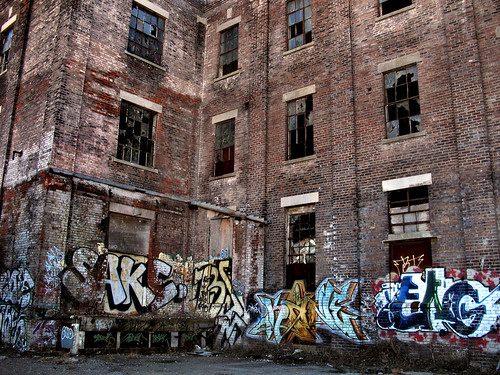
This photo shows the old Screw Works Factory which I used in my book(changed the name)as the place the runaway kids took shlter in. The factory has since been demolished.


Here's a photo of the People Mover--an elevated light rail system in downtown Detroit that I used in the story.


The heroine in the story lived in the historic Corktown area:


Setting can make a story come alive and take the reader to a place they've never been. Add an unforgettable tale of love and more than likely your book will remain with the reader long after they finish the last page.

What's the most unusual, intriguing setting you've come across in a Romance novel?

Marin Thomas
Samantha's Cowboy (Aug 09)
A Cowboy Christmas (Dec 09)
www.marinthomas.com

Sunday, June 14, 2009

Pamela Stone - Newbie Interview

1) How did you make your first sale? I got the call on Friday the thirteenth. How is that for luck? My editor had judged the book in a contest and placed it first. She didn’t initially offer to buy the book but sent me a wonderful rejection letter. I revised the manuscript accordingly and met with her again at National in Dallas. She remembered the book and agreed to look at it again and voila.

2) If you had to pick one word to describe your writing, what would it be? Beachy

3) Tell us a little about your family and where you're from. Born and raised in Texas. Married my high school sweetheart and have two wonderful sons and three amazing grandkids.

4) Tell us about your book. Last Resort: Marriage takes place in Marathon Key Florida. A hotel heiress agrees to marry a down on his luck Scuba guide to save both their businesses only to discover she’d rather lose the business than the guy. Aaron and Charlotte are opposite in every way. She’s got a wall full of diplomas and he earned his degree on the rough streets of Miami. She’s champagne and caviar and he’s beer and peanuts. But watching the fireworks as they mesh and fall in love is fun.

5) If you could be lazy for an entire day what would you do? Let my feet and mind wander up and down a sandy beach.

6) What is your strangest habit? Writing doesn’t count? Think about it. We sit around and invent people (notice I didn’t use the term characters). These people are real. I see them, talk to them, know how they react and why they are the way they are. I like them better than some people I know.

7) What is one thing scientists should invent? A money machine that pays all my bills so I can concentrate on writing. Not asking for unlimited wealth here, just enough to not have to worry about a day job so I could concentrate on writing.

8) What do you like to do when you're not writing? Spend time with my family or take a trip to the beach or best of all, take a trip to the beach with my family.

9) What is your writing routine? It varies. I try to write for an hour each morning after my husband leaves for work and before I have to sign in to my day job computer. Then I try for at least another hour of writing before bed. See question 7 above. Must have money to eat and that day job severely impacts my writing time. At least I write fast once I sit down to the task.

10) If you could wish for anything, what would you wish for? Health and happiness for my family and friends.

11) What was the hardest part of writing your book? Writing it was easy and fun. Figuring out how to market and sell it was the hard part.

12) What inspired you to write your first book? I’ve been making up stories as long as I can remember. I make up episodes or alternate endings to TV shows or movies. I remember reading books and thinking, “If they’d only done this.” Sometimes it’s a single lyric or line of dialogue. Or sometimes it just comes to me out of the blue, like the line, “She gazed at the exquisite specimen of masculinity in her bed. She hadn’t set out to marry Aaron Brody, it just sort of happened.” After making up stories for years, I finally decided to actually put one down in black and white.

13) How long have you been writing? I’ve been making up stories all my life, but didn’t start actually putting them down on paper until I was staying home with my two sons.

14) What did you want to be when you grew up? An architect

15) What would you say is your interesting writing quirk? I see scenes play out in my head and sometimes just close my eyes and type as I watch them unfold.

16) When did you first consider yourself a writer? Whoa. I tried to tell myself I was a writer before I sold, but I didn’t really believe it until I got that call.

17) What got you interested in writing? Great story telling. Always rewriting what I read or watched.

18) What is the one question you wish an interviewer would ask you? I have absolutely no idea. They all make me nervous.

19) What was one of the most surprising things you learned in creating your book? I am hero based. The entire story revolves around my hero. I am more inside the hero’s head than the heroine’s.

20) What's a saying you use a lot? Life’s a beach.

21) What's your favorite dessert? I pretty much drink my desert in the form of Dr. Pepper.

22) If you were stranded on Island for a month and could bring three things along what would they be? Since you didn’t specify a ‘deserted island’ I’m going to assume it has the basic necessities covered and say, sunscreen, flip flops, and a laptop.

23) Why did you target the American Romance Line? I enjoy character based stories. Not that I’m against sexy stories, but I’m just more interested in the characters as people.

24) Do you have any talents readers might find interesting? I sometimes write with my eyes closed. That seems weird to me.

25) What were you doing at midnight last night? Unpacking boxes. We are in the process of moving.

26) Are you a cat or dog person? Both, but currently have a dog. Although he’s a black Pomeranian and about as much like a cat as a dog.

27) Describe your ideal dream date – fresh seafood dinner, long moonlit walk on the beach barefoot just listening to the waves and talking. Or not.

28) If someone gave you a million dollars what would you do with the money? Invest it in an annuity to pay me a salary so I could quit work and write full time and still be able to afford to help my kids a little and take an occasional trip.


I’d also like to comment on all the blogs this month about settings. I’m a native Texan and love the many faces of Texas. South Padre Island and the endless sand dunes. The Texas Hill Country is fantastic and I'm working on a book set in Marble Falls. I have a book set in Galveston and tried to capture the unique flavor and history of the island. Last Resort: Marriage is set in the Florida Keys however, and I could go on and on about my love affair with the Keys. Setting to me is an additional character with its own personality.

Pamela Stone

Last Resort: Marriage

Harlequin American, July 2009

Saturday, June 13, 2009

My favorite river


The Guadalupe River in Texas is my favorite place to set a story. On its 432 mile trip to the Gulf of Mexico the cold, green water meanders through sheer cliffs of limestone, passes through fields of shrub cedar and live oaks and provides sustenance for pecan and peach groves. And that’s just the flora and fauna. On the human side you can discover dance halls dating from the 19th century, swimming holes that are deep and cold, floating block parties and world class ski jumping competitions.


The Guadalupe starts it journey high in the Texas Hill Country and flows past some of the oldest summer camps in the country. From there it wanders down to historic Gruene where you can spend the day tubing and the night two-stepping in Texas’s oldest dance hall. This is where George Strait and Lyle Lovett got their start. BTW - it was also the setting for my third book, Somewhere Down in Texas. When I visualized the hero in that story I imagined a cross between George and Tim McGraw.

Then the river meanders toward Seguin, my home town. As a kid I spent so much time in the water I’m surprised I didn’t grow web feet. My September 2007 book, Summer After Summer incorporated many memories from those lazy, hazy summer days of swimming, skiing and sunbathing.


But like most things there’s a downside – and in this case it’s flooding. Texans know that when Mother Nature decides to pitch a hissy they sit up and take notice. I know several people, including my brother, who returned home after a flood to find nothing but a slab foundation or water up to the eaves of their house. My February 2010 book, Hill Country Hero features a river rescue.

So here’s wishing I was spending my Saturday “toobing” my way to New Braunfels while sipping on an icy Shiner Bock.

Have a happy summer,

Ann DeFee
Top Gun Dad, HAR, October 2009
Hill Country Hero, HAR, February 2010

Friday, June 12, 2009

Setting

I'm one of those people who likes to use real settings. One of my favorites is my hometown of St. Louis. Since I've lived here all my life, including both undergraduate and graduate college, I feel that as a native I can take liberties. Some of my favorite books are here, such as Capturing the Cop, Catching the Corporate Playboy, About Last Night, The Playboy's Protegee, and Unwrapping Mr. Wright.

I'm a big city girl, and so most of my works take place in a bigger city. That doesn't mean that I don't move around. I let things inspire me. My trip to Branson and Manhattan, KS, brought about setting Twins for the Teacher in Branson. I used to spend summers on a lake in Wisconsin, and I used that lake, but moved it to Minnesota, for July's Bachelor CEO. In honor of Mike Storm, who gets a small role as a character in Bachelor CEO, I set the book in Iowa, which is where he and his wife are from. After having to work in the classroom next to me for 6 years, I figured it was the least I could do.

My first book A Little Office Romance took place in Washington DC, a setting usually taboo in the romance world for some reason. I ended that book in St. Louis, when the hero finds his heroine at the ball game.

The fun part of settings for me is what is real, what is fiction, and what is a little bit of both.

PS, I am now a public person on Facebook. You can be a fan at www.tinyurl.com/r8hkd7

Michele

Thursday, June 11, 2009

Cleaning Dried Flower Arrangements

How many times have you walked past a dried flower arrangement in your house and cringed at the dust on it? I love dried flowers but they're a lot of trouble to clean. Before I found this shortcut I would spend way too long picking out the dust clumps and strands of dog fur (who knows how those floated up in the air and landed on the arrangements) and then I'd take a damp paper towel or rag and wipe each petal of the flower clean. If it was a silk-flower arrangement I'd take it apart and soak the flowers and greens in a tub of soapy water--but when I tried to put the arrangement back together I could never get it to look like it did before.

A friend passed along this incredible tip for cleaning silk or dried-flower arrangements. Take the arrangement out to the garage--make sure the garage door is up or if your back porch or patio has an outlet take the flowers out there. Check which way the wind is blowing ( I learned this the hard way after I got a face full of dust) Use the medium /cool setting and blow dry the arrangement. Most of the dust will fly right off and be carried away by the wind. Next use a silk-plant cleaner (Hobby Lobby sells a silk flower spray--sign up for their internet e-mails and you'll receive a 40% off coupon once in awhile) The spray will clean the rest of the dust off and make the flowers smell nice.

Marin Thomas
Samantha's Cowboy (August 2009)
www.marinthomas.com

Wednesday, June 10, 2009

The real Crested Butte


While Lisa prefers to write about fictional towns, I've chosen a real place as the setting for all my Harlequin American Romances. Crested Butte, Colorado is a real ski town in Southwest Colorado, and one of my very favorite places to visit.

I did contemplate changing the name when I first set out to write my series of books set in the carefree resort town, but I decided that the real thing is too unique and fun to try to copy.

Not only is the town real, but all the festivals and most of the businesses and landmarks in my books (Marriage On Her Mind, The Right Mr. Wrong, The Man Most Likely and the upcoming Daddy Auditon and Her Christmas Wish) are real. From Flauschink, which celebrates the flushing out o winter, to Vinotok, featuring a giant effigy of The Grump that goes up in flames with the complaint and regrets of townspeople inside, Crested Butte knows how to throw a good party.

None of the people in my books are real people, though. That probably doesn't stop people in Crested Butte from looking for their friends and neighbors in the pages, but so far I haven't had any complaints.

Of course, I'm writing fiction, so I don't pretend to stay true to every facet of life in the real Crested Butte. I try hard not to write anything derogatory or negative. I really do love the town and the people I've met there have always been very nice and supportive. If any of them are offended, I'll take this opportunity now to apologize to them.

Writing about a real time is a tricky balancing act between adhering to facts and choosing the details that work for my characters and story. I hope readers will see love visiting the town in my books as much as I love going there iin real life.

You can find out more about the real Crested Butte here.

Monday, June 08, 2009

Settings are so important!

For Harlequin American especially, settings are so important. It’s more than where a story takes place – sometimes it seems that it’s also the who (whom, actually) and the why. At least that’s the case with my Citizens Police Academy series. Lakewood, Michigan is the whom my law enforcement officers have sworn to protect and serve, and it’s the why they do their job.

The Lakewood in my series is a fictional city, but since writing the books, I’ve learned that there is a real city with that name – and it’s eerily close to where I positioned my fictional city on the beautiful Lake Michigan shore in lower, western Michigan.

That’s just happened to me again – with a new Harlequin American I’m writing. I thought I created a city, but I’ve actually stumbled across one that already exists again – and in the same proximity of my new fictional setting. Maybe I’ve retained more information from Geography class than I realize, or I have a photographic memory for only the map of Michigan.

I prefer to use a fictional city or town for my settings, so that I don’t inadvertently offend anyone. For instance, the mayor of the Lakewood in my books is not a particularly nice man, and I would hate for the mayor of the real city to think I’m talking about him or her.

I’m often asked if I base any of my characters on real people I know. My brothers and sisters always look for themselves in my books, probably convinced that I’m giving away their secrets. But all my characters are definitely real only to me and hopefully my readers. I do, however, often base my cities on real cities. For instance, Lakewood is actually a composite of the Michigan cities of picturesque Grand Haven and more urban Muskegon. And I’ve called Grand Rapids, Michigan by many other names.

So do you like reading about real settings or fictional ones that become real to you? I’d love to read your comments!

Thanks!
Lisa Childs

In a Texas frame of mind...


In a Texas frame of mind…

Oh, one of my favorite topics—setting. It’s such a big part of our stories. My books are set in Texas from the beautiful Hill country in central Texas to the piney woods of east Texas to the rolling plains and prairies to desolate west Texas and to the Texas Gulf coast.
My characters have a kaleidoscope of landscapes where they work, play and fall in love.

My favorite is small town Texas and ranches. I grew up in rural Texas on a farm/ranch. That’s what I love about writing for the American line—I can draw upon those years for references and inspiration.

As a kid my dream was to live in the city. On a hot summer’s day I’d sit beneath a huge live oak whose branches spread out like an umbrella over a stock pond on our ranch. I’d look up and see the sun peeping through the branches and wish I was anywhere but here on this dusty, hot ranch. I’d dream of air-conditioning and the city where a girl didn’t have chores to do or have to get her hands dirty. As you can see I’m a daydreamer.

After high school, I finally left the ranch for college and the big city. It was rush, rush, rush. People weren’t as friendly as they were in our small community. It was a big adjustment. I then realized what I’d had all along; the serenity and comfort of wide open spaces and the security of family and home. I go back every chance I get. Most of the time I go back in my books. They contain a piece of my childhood and a slice of life in Texas.

I think most authors write about what touches their heart, their emotions and their senses. I’m always in a Texas frame of mind. How about you? Any favorite settings?

Linda
http://www.lindawarren.net/
The Sheriff of Horseshoe, Texas – March AR
Caitlyn’s Prize – July SR

Sunday, June 07, 2009

Setting Influences Character

Hello Everyone!
This month some of us are talking about settings for our stories, and I have to say I'm more excited to read this blog than ever. Back in the dark ages, all the romances were set in exotic foreign places. Now, I love those books and still read them, don't get me wrong, but I thought: hmmm, don't American men and women fall in love? Isn't there any romantic city in the USA? So when the first American settings appeared, with American men I might dream about, and American women who could just as easily be friends I grew up with, I was thrilled. (Anyone willing to believe I was also three years old?)

My first book is set in Chicago, a city known for its wind, chill, pizza, politics, and most recently, our President. There are little neighborhoods, impossible one-way streets, and places that are--well, let's just say you wouldn't want to be caught there after dark. I love Chicago. I asked the Harlequin art department to put skyscrapers on the cover of Marrying the Boss since Louis Sullivan and Frank Lloyd Wright (plus others I can't think of now, sorry) "invented" the tall buildings there after the Chicago Fire. It's a big city so it has an "on the edge" feel, but with a Midwest twang. This influences the lives of my characters, of course.

For my second book, I created a fictional town outside of Kansas City, Missouri. "Howard" has a small-town flavor, where everyone knows everyone else and your mom's friends tell her if you're out on a date--or not. My hero in The Fake Fiancee had to deal with this situation after he told his mom he was "practically" engaged, when in fact he wasn't seeing anyone. Poor Joe had been out on the West Coast too long and forgotten how small towns work. His intentions were good (protecting his mom's fragile health), as he's a decent Midwestern man. I loved when characters showed up to bedevil them--at the Garden Society Exhibit, the movie theater, in restaurants, everywhere he and his "fake fiancee" went. It's fun to place the hero and heroine in boring locations (the laudromat, for instance) and see how their presence there makes the spot romantic.

The big city whirlwind and the small town coziness both appeal to me since they "grow" such different crops of characters. Do you have a preference?

Till next month,
Megan Kelly
megankellybooks.com

Saturday, June 06, 2009

It's Author News Day!

Contest Winner

CONGRATULATIONS MarcieR! You are our May winner. To receive your free autographed books please contact Lisa Childs and Linda Warren through their Web sites.

To enter our monthly contest simply leave a blog comment and your name will go into the drawing. Simple and painless. And FREE BOOKS.

So check back often and be sure to leave a comment. Good luck!

News

This month we’re sending a big, warm welcome to multi-published author Rebecca Winters! Her first American Romance—The Chief Ranger—is a June release.

This June eHarlequin is celebrating Harlequin American Romance and we thought, what would be better than having a virtual picnic—a scrapbook of memories, photos, recipes and your favorite things to do to commemorate America's birthday?

It's your turn! Give us your recipes, what you can't live without at your 4th of July picnic, your most requested item, traditional items on the table, tips for keeping away the bugs, your favorite spots and memories —we encourage pictures—and your favorite books to sit outside and read. Watch for some of your favorite authors—including an online read by Cathy Gillen Thacker—and discover new authors this month as we chatter while sitting on our virtual checkerboard blanket!
Congratulations to Ann Roth and Linda Warren. Ann’s THE PILOT’S WOMAN (American Romance, March 2008) and Linda’s TEXAS BLUFF (Superromance, February 2008) are finalists in the Holt Medallion Contest!

Reviews

Ann Roth’s July release, A FATHER FOR JESSE, is a Romantic Times Top Pick and received a 4 ½ star review!

Mark Your Calendar

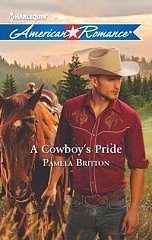
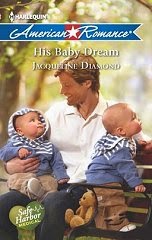
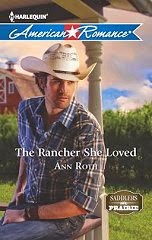
June 9—Harlequin American Romance release day! Four great new reads. Check out the covers in the sidebar.

June 23—Don't miss our June author interview with Cathy McDavid here on the blog.

June 25—This will be our next news day on the blog. Be sure to stop by to find out what’s “news” with the Harlequin American Romance Authors.

Friday, June 05, 2009

Location, location, location…. Setting is key to any story

We writers love to talk about our craft. This month’s topic is setting (aka atmosphere, background). The overall setting is the town or city where the story happens--including the little details that bring the place to life. On a smaller scale, setting is where each scene takes place. Setting plays a role in any story. In some, it becomes like a character. For example, in a story where characters must battle the elements in order to survive, whatever those elements are become so key that they are every bit as important as any character.

In American Romances the sense of community is all-important. The setting can augment that community feel. My American novels take place in small towns to underline the community element, but a writer can do the same in any big city. It’s all in how we present the atmosphere and background and the characters involved.

For my Halo Island series, I chose a small island with a big summer tourist business. I like the sense of separateness and intimacy created by the island. Some of my other story settings have been in fictitious towns on the Oregon Coast, in towns on the outskirts of Seattle, and in a fictitious Midwest town. Each is a unique atmosphere that in some way highlights or adds to the story.

Setting can have a huge impact on who the characters are and how they view life. Take a character, say the novel’s hero, born and raised in Big Sky country, where the population is limited and the terrain is vast and open. Now imagine the heroine born and raised in Manhattan, with its concrete and tall buildings, and the non-stop hordes of people.

How might these two view the world? Chances are, not at all the same way. Your Big Sky fella might be used to a slower tempo, thinking huge and speaking his mind. If he needs to get away, he might hike or take a long drive. Whereas Ms. Manhattan might be on espresso time, fast, fast, fast. Her world might be limited to the people in her apartment building or her work. Maybe she hides her thoughts in order to get ahead. When she needs a break, she shops or dashes into a coffee bar. The hero might quickly feel overwhelmed in the Big Apple, and the heroine would quite possibly freak out at the quiet and space in Montana.

I could go on and on about the differences created just by where a person is raised… but due to space constraints, I won’t.

But I would love to think about and discuss setting further. So please join in. What kinds of settings do you enjoy? What settings would you like to see in future novels?


Ann
www.annroth.net
A Father for Jesse
RT Top Pick! July, 2009