Showing posts with label 25th Anniversary. Show all posts

Tuesday, November 25, 2008

Our 25th anniversary—thanks for being part of it!

The Harlequin American Romance authors wish to thank everyone who took part in our 25th anniversary celebration, especially the editors and guest authors who took time from their busy schedules to blog with us. In case you missed any of them, here’s the list, complete with links back to their original posts.

Editors:
Johanna Raisanen, September 6
Kathleen Scheibling, October 9


Guest Authors:
Karen Toller Whittenburg, September 12
Elizabeth Sinclair, September 20
Judith Arnold, September 30
Vella Munn, October 6
Barbara Bretton, October 12 and October 19
Debbie Macomber, October 20
Ginger Chambers, October 30
Anne Stuart, October 31

Thank you for making this anniversary such a special and memorable one!

Friday, October 31, 2008

Happy 25th--A Q & A with Anne Stuart

And now to finish out the month, meet Anne Stuart.
Books: Began writing for American with Chain of Love (#30) in October 1983.

Bio: Anne Stuart is the grandmaster of the genre, winnter of Romance Writers of America’s prestigious Lifetime Achievement Award, survivor of 35 years in the romance business and still keeps getting better.

Her first novel was Barrett’s Hill, a gothic romance pubished by Ballantine in 1974 when Anne had just turned 25. Since then she’s written more gothics, regencies, romantic suspense, romantic adventure, series romance, suspense, historical romance and mainstream contemporary romance for publishers such as Doubleday, Harlequin, Silhouette, Avon, Zebra, St. Martin’s Press, Berkley, Dell, Pocket Books and Fawcett. She’s currently under contract with Mira for romantic supsense and historical romance. She’s won numerous awards, appeared on most best seller lists, and speaks all over the country. Her general outrageousness has gotten her on Entertainment Tonight, as well as in Vogue, People, USA Today, Women’s Day, and countless other national newspapers and magazines.

When she’s not traveling, she’s at home in Northern Vermont with her luscious husband of thirty years, and empty nest, three cats and one Springer Spaniel. And when she’s not working she’s watching movies, listening to rock and roll (preferably Japanese) and spending far too much time quilting.
The Q & A

1) How long have you been published? What was your very first book? My first book came out in 1974 (I was very young). It was a gothic romance for Ballantine called BARRETT’S HILL.

2) Describe your favorite Harlequin American Romance(s) that you wrote. How many total did you do?
Favorite would probably be NIGHT OF THE PHANTOM (which has never been reprinted). It was a re-writing of the Beauty and the Beast/Phantom of the Opera story (I’d just gone to see Phantom on Broadway for my 40th birthday present) and it even had Fabio on the cover (albeit with dark hair). They didn’t tend to put Fabio on too many series romances back then. As to how many – 27, counting the BURNING BRIGHT anthology and BANISH MISFORTUNE, part of the short-lived Harlequin American Premier Editions (there were five of them).

3) How was the Harlequin American Romance line different from the other Harlequin lines?
HAR went through many permutations. It was the first North American line that Harlequin had done (they had Harlequin Romance and Harlequin Presents at that point), and in the beginning it was simply that they were set in the U.S. They quickly turned into Disease of the Month – each book seemed to be centered around the romance equivalent of “a very special episode.” Stuff like drug addiction and abortion and other stuff. It got livelier fairly quickly though, with comic writers like Beverly Sommers and Judith Arnold, women’s fiction-y stuff by Kathleen Gilles Seidel, Barbara Bretton and Cathy Gillen Thacker, and my sneaky romantic suspense (which actually should have gone in Harlequin Intrigue) We also had the first romances with African-Americans as the protagonists (written by people like Sandra Kitt).

4) How did the Harlequin American Romances line change over the years you wrote for it?
The nice thing is there’s been room for a lot of different things in the line. There was a cool sub-imprint called More Than Men which had supernatural heroes – I did two, CINDERMAN, with a scientist who could turn invisible from 8 to 9 in the morning and the evening and could start fires by wiggling his nose like Samantha on Bewitched, and A DARK AND STORMY NIGHT, about Selkies (seal people). Maggie Osborne wrote a wonderful early vampire novel called LOVE BITES as Margaret St. George.

We also did a series called A Century of Romance. I got the 1930s and it was one of my favorite HARs, but it tanked big-time. They tried to reissue them a couple of years ago but the audience still wasn’t there. The great thing about Harlequin is there’s always another chance – eventually those books, by people like Rebecca Flanders, Barbara Bretton, Margaret St. George and others, will find their audience.

5) How did writing for Harlequin American help you in your single-title career? The more you write the better you get. I spent more than 15 years writing them, and in that time I got to explore all sorts of characters and relationships. I’d published 5 books before I sold to HAR, and I learned more with each book. That doesn’t mean the older ones aren’t as good – sometimes a more polished book can lack the energy and heart of a rougher one.
My first single titles after I started writing for HAR were historicals for Avon (while I was still writing HARs). Jennifer Enderlin, who was at Penguin at the time, read NIGHT OF THE PHANTOM and my novella for the Silhouette Shadows launch, and offered me a six-figure contract just on the quality of my HAR work. So that was a direct correlation.

6). Describe a moment you remember related to Harlequin American Romance, either reading one, or a fan moment, or an editor moment, or….
God, I have tons of memories. Like torturing one of my poor editors so that she followed me around at conferences like my personal slave. (I was a very bad girl). Or when I wrote NIGHT OF THE PHANTOM and my entire career seemed to shift into high gear. Or the godawful time I was in the middle of writing a book called LAZARUS RISING, where my hero fakes his death and then appears, alive and well in the middle of the book. Unfortunately my 18 year old nephew died in a car accident when I was in the middle of writing it, and I knew that unlike my hero, he wasn’t coming back. I somehow managed to finish writing it, but I’ve always hated it because it reminds me of his death.

7) Do you hear from your Harlequin American readers who have also read your single titles? What do they say?
My HAR readers don’t seem to cross-over much with my single title readers. I don’t really know why.

8) Harlequin American Romance is 25 years old. Describe writing some of the first books for the line. Were there any taboos? Words you couldn’t use? What were the covers like? That sort of thing….
There were all sorts of taboos, and yet there were also things that we couldn’t do today. For instance, in one of the early ones written by Jackie Casto, the heroine had an abortion. Couldn’t say “shit” (can you now?), definitely couldn’t say God damn it or any kind of God or Jesus cursing. And while they let me use bitch and bastard they’d count how many times I used them, and sometimes I had to trade using a no-no word in one scene in order to get it into the scene where it was more important.

The covers were standard clinch covers with a silver border, usually a larger picture and then a smaller one in the corner. I remember one year I had the brilliant idea of doing Christmas books in December and having the silver stripe be green. They told me it was a good idea but too expensive. Obviously they should have listened – soon afterwards all the lines were doing Christmas books.

9) Anything else?
It was actually a wonderfully creative time. Many of us met at the third Romantic Times conference in New York, just as the line was being launched, and some of those friendships have lasted forever. Sandra Brown did the launch book, but unfortunately she also did the launch book for Loveswept, which was debuting at the same time, and the PTB were mightily pissed off. So instead of having the debut authors cut a cake at the launch party they had three of the launch authors (I think they were Kathy Seidel and Barbara Bretton and maybe Beverly Sommers) and invited Rebecca Flanders/Donna Ball to join them.


Thursday, October 30, 2008

Happy 25th—Author Profile Ginger Chambers

Author: Ginger Chambers
Website: Find more about Ginger at http://www.eharlequin.com/
Years writing for the line: 1983-1991, 2005

Bio: Ginger Chambers had no plans to become a writer while she was growing up. But she always loved words and stories, so it was only natural that the inevitable happened. After writing over thirty books, Ginger still loves the profession she was ultimately drawn to. She considers it one of the great joys of her life to be able to create characters that come to life on the page and place them in situations that entertain her, as well as her readers.
Ginger started her career with Dell Publishing in the Candlelight Romance, Ecstasy and Ecstasy Supreme lines before moving to Harlequin, where she’s written for the Harlequin American Romance series, Special Projects — Welcome to Tyler and Hometown Reunion — and Superromance books. Within the Superromance line she authored the popular seven-book series The West Texans. Her most recent book is Love, Texas for the American Romance line. Presently, she is hard at work on another American Romance title.
Her two children now grown, Ginger makes her home with her husband near the beautiful Pacific in Northern California.

Q & A:

How long have you been published? What was your very first book?

I sold my first book, THE KINDRED SPIRIT (A Candlelight Romance, Dell Publishing), in October of 1979, so this month is my anniversary as well. It didn’t appear on the shelves until April of 1981, so the wait was a long one for an excited new author. Vivian Stephens, the line’s senior editor, soon started the Candlelight Ecstasy line for Dell, which I then contributed to. At the time Harlequin published few US authors, but when Vivian moved to Harlequin to start the American Romance line, I came right along with her. My first American Romance was #32, GAME OF HEARTS.

Describe your favorite Harlequin American Romance that you wrote. How many in total did you do?

That’s like trying to choose between your children! I feel disloyal even thinking about it … but I love animals, particularly dogs and cats, so my book where the hero is a veterinarian, PASSION’S PREY, is a favorite, as is CALL MY NAME SOFTLY. The last for an odd reason—there was a hit man in the book with orders to do away with the heroine, and all the while he was trying to fulfill his job, he had a horrible head cold. I had fun with that.

I also have a more recent American Romance, LOVE, TEXAS, #1064, which was published in April 2005. So, all together, I’ve written 11 American Romances. So far—

How was the Harlequin American Romance line different from the other Harlequin lines?

American Romance opened the door for US authors at a time when, previously, opportunities had been limited. It’s hard to believe there ever was such a time, considering the number of US Harlequin writers today, but many of us lived it. And readers responded--they loved to read Harlequin books set in places they knew or could easily visit, and which were peopled by characters who could be them or their neighbors.

How did the Harlequin American Romance line change over the years you wrote for it?

Vivian Stephens accepted only completed manuscripts before she would go to contract. And, with her track record, she proved to have a knack for choosing books that readers loved. She wanted well-written books with believable plots and characters where romance carried the story forward. I still remember hearing her say at a conference that she wanted us (the writers) to use all our senses. She wanted the stories to be sensual in the fullest sense of the word—hearing, sight, smell, taste, touch.

When Vivian left the line, Debra Matteucci became the senior editor and carried on in a similar vein. Debra was open to going to contract with a partial, though—50 pages and an outline. So I, along with other American writers, learned to do that. To this day, I’d still rather write the whole book , but then knowing the book is sold before completion is very nice too.

Over time the focus of the line changed. It’s hard to put my finger on how, but it was different. After being asked to contribute two books to the Welcome to Tyler series, Harlequin’s first continuity series, I jumped at the opportunity and loved every minute of researching and writing BACHELOR’S PUZZLE and COURTHOUSE STEPS. Along with two books in the follow-up Tyler continuity series Hometown Reunion, DADDY NEXT DOOR and PUPPY LOVE (another veterinarian book).

Since then, I’ve written for Superromance, where I’ve had 9 books published, 7 of which were my own series within the Superromance line, The West Texans, which followed the lives of the Parker family of the Parker Ranch.

Describe writing some of the first books for the American Romance line. Were there any taboos? Words you couldn’t use? What were the covers like? That sort of thing….
I never had any problem with taboos or words I couldn’t use, because my stories never went in those directions. Guess I’m just not a very venturesome person.

The silver strip on the covers of the early American Romances were beautiful and eye-catching. I was very happy with all of them. The art department at Harlequin has always been very kind to me … with one or two exceptions over the years that we won’t talk about.

Anything else?

Yes. My upcoming book! It’s a June 2009 Superromance that was originally an Everlasting Love. At present I’m desperately casting about for a title, which I’ll have to find soon, because a book can’t hit the shelves with UNTITLED on the cover. It’s about a couple who have been married for twenty-seven years, and are having problems in their relationship. An accident strands them off road in the mountains in a bad snowstorm, where they’re forced to work together to survive….

Michele Dunaway notes: Thanks Ginger. Readers--don't miss tomorrow, when we conclude the month with Anne Stuart!

Monday, October 20, 2008

Happy 25th Anniversary--Q & A with Debbie Macomber

Michele Dunaway says: Thanks to Ann Roth for securing the following interview from Debbie and for yesterday agreeing to host Barbara Bretton in her blog spot. Thanks Ann. You're tops.

Here we go!

Author: Debbie Macomber
Website: http://www.debbiemacomber.com/

Bio: Debbie Macomber, the author of BACK ON BLOSSOM STREET, SUSANNAH’S GARDEN, A GOOD YARN, THE SHOP ON BLOSSOM STREET, BETWEEN FRIENDS and the Cedar Cove series, is one of today’s leading voices in women’s fiction. A regular on every major bestseller list with more than 100 million copies of her books in print, the award-winning author celebrated a new career milestone in September 2007, when the latest in her Cedar Cove series, 74 SEASIDE AVENUE, scored #1 on the NEW YORK TIMES, USA TODAY, Publishers Weekly and Bookscan bestseller lists. Her popularity is worldwide with her books translated into twenty-three languages.

Debbie loves to tell the story of her struggle to get published, and the five-year search to find a publisher who would buy one of her manuscripts. Dyslexic and the mother of four young children, she wrote those early books in her kitchen on a rented typewriter. But her hard work and determination paid off. Her first manuscript, HEARTSONG, acquired by Silhouette Books in 1982, became the first category romance ever to be reviewed by the Publishers Weekly. She was soon featured in Newsweek—and demand for her books quickly exceeded her wildest dreams.

Debbie is best known for her ability to create compelling characters and bring their stories to life in her books. Drawing on her own experiences and those of her family and friends, she demonstrates an almost uncanny ability to see into the souls of women and to express their emotions, values and concerns. In every book her sense of humor enlivens her writing.

An avid knitter, Debbie has parlayed her passion for the craft into garments for her grandchildren and bestselling books about women who knit. In her May 2007 hardcover, BACK ON BLOSSOM STREET, which debuted in the #8 slot on the NEW YORK TIMES bestseller list, Debbie welcomed back some familiar faces and introduced her readers to delightful new characters in the Seattle neighborhood introduced in THE SHOP ON BLOSSOM STREET. There, the author continued her moving exploration of complex relationships and the special bonds formed by a group of diverse women who meet in knitting classes and face the challenges in their lives. The next book in the series, TWENTY WISHES, will be published in May 2008.

In 2005 Debbie’s dedication to the writing craft—and to her loyal readers—brought her the first-ever “people’s choice” Quill Award for Romance for 44 CRANBERRY POINT, the fourth book in her highly popular Cedar Cove series.

The author is delighted that her readers respond personally to her books. She maintains a 75,000-name (and growing) list derived from personal correspondence from her fans, those who have come to her book signings held in bookstores across the country and those who have signed her guestbook at http://www.debbiemacomber.com/.

A typical day in the life of Debbie Macomber begins long before the sun comes up. Rising at 4 a.m., she uses those early hours as a time to reflect, write in her journal, read inspirational materials and organize her schedule. At 6 a.m. she swims half a mile in a local Olympic-size pool. By 7:30 a.m. she’s already at work in her office, devoting her day to her true calling: writing novels. Readers around the world clamor for her heartwarming books about small-town life, home and family, women who knit, enduring friendship and even stories of humorous angels with earthly missions.

In 2008, Leisure Arts, the company that publishes “Knit Along with Debbie” pattern booklets, will introduce Debbie’s line of knitting notions. All Debbie’s proceeds from the sale of the products will go to knitting charities and World Vision.

When Debbie takes a break from her writing, knitting and charity work, she likes to throw herself into research for upcoming novels. She’s willing to try anything and go anywhere. In fact, she overcame her natural sense of caution to take kayaking lessons so that one of her heroines could benefit from the experience. Recently, she threw out the first pitch in a Seattle Mariners game at Safeco Field.

Debbie and her husband, Wayne, are the proud parents of four children and grandparents of nine grandchildren. They live in Washington State and winter in Florida.

Q & A:


WHAT WAS YOUR VERY FIRST BOOK AND FOR WHAT LINE?
My first published book was Starlight (Silhouette Special Edition, #128) in November, 1983. My first Harlequin title was The Matchmakers, published in 1986. It’s being reissued in March of next year.

WHO WROTE SERIES ROMANCE IN THE EARLY YEARS OF YOUR CAREER? WHAT DID YOU FIND MOST CHALLENGING AND MOST REWARDING WRITING FOR A HARLEQUIN LINE?
Janet Dailey was writing then, and I loved her books. I also liked a number of the British (and Australian authors), like Anne Mather, Margaret Way, Violet Winspear, Charlotte Lamb. I wanted my books to be as engaging and heartwarming as theirs. The most challenging aspect was trying to break into Harlequin and Silhouette lines when they already had so many talented writers. The most rewarding was when I did!

WHAT DID YOU ENJOY MOST ABOUT WRITING THE WYOMING KID FOR THE AMERICAN LINE?
Writing The Wyoming Kid (HAR 1121) was a nice break from the lengthy women’s fiction novel I’d been working on prior to that. I enjoyed returning to the characters I’d first introduced in a Special Edition, Denim and Diamonds, years before. Readers had asked for the heroine’s brother’s story, and I decided this was the opportunity to tell it. I particularly enjoyed the character of Lonny Ellison and the banter between him and the heroine, Joy. And I liked the emphasis on place—in this story, the ranching community of Red Springs, Wyoming—which I know is a hallmark of American Romance .

HOW WAS THE HARLEQUIN AMERICAN LINE DIFFERENT FROM OTHER LINES OR YOUR OTHER BOOKS?
Frankly, it wasn’t that different from other series books I’ve written, in that I was able to include a comedic element as well as a dramatic one. Obviously, given the shorter word length compared to my MIRA titles, The Wyoming Kid was a less complex story but it’s one that really appealed to me.

DESCRIBE A MOMENT YOU REMEMBER RELATED TO A HARLEQUIN OR SILHOUETTE ROMANCE LINE.
One letter I received from a reader years ago said, “I’ll buy anything that has your name on it, so thank you, Betty, for writing such wonderful books.” I realized the reader had confused me with Betty Neels, but I wasn’t disturbed by the mistake and, in fact, considered it a compliment.


WHAT ROMANCE HERO ARCHETYPE IS YOUR FAVORITE?
Gee, I don’t really know. I create the hero who best fits the story. Plot and character are, of course, interdependent. Lonny, the former rodeo cowboy known as the Wyoming Kid, was the right hero for that story and that heroine (and she was equally right for him). I would by no means describe him as an “alpha male,” but he’s a competent and confident man—until he falls in love!

DESCRIBE DEBBIE MACOMBER’S TYPICAL WORK DAY
Well, this is my life when I’m writing and trying to meet deadlines, not when I’m traveling or on tour.
4 a.m. Up and out of bed
4-5:30 Bible reading, devotional and journal time
5:30-7 Swimming
7:30 Arrive at office
7:30-10 Read Guest Box entries, reader mail and blog
10-4 (Approximately) Work (If I’m writing a book, I always set myself a certain number of pages to complete each day. I stay at the office until I’m finished and then head home.)
5-9 (Approximately) Dinner, knitting, reading and then to bed

Hmm. Sounds rather boring now that I look at it.

WHAT’S NEXT FOR YOU?
I’m currently working on the 2009 Cedar Cove title, 92 Pacific Boulevard, and on the Cedar Cove Cookbook (and gaining weight just thinking about the recipes!). In the next month, I have trips planned to New York, California and Leavenworth (the one in Washington, not the prison town!).

ANYTHING ELSE YOU’D LIKE TO SAY TO THE READERS AND WRITERS READING THIS INTERVIEW?
To all the readers, I’d like to say that these books come from some of the best writers in the industry. In the years since its inception, Harlequin American has grown and changed—and attracted some very fine writers. To the writers, I’d like to say—keep up the good work. Happy Birthday, American Romance!

Sunday, October 19, 2008

More with launch author Barbara Bretton


For the first part of the feature on launch author Barbara Bretton, please see October 12.


Photos--

Top: Barbara says, "The badly edited picture is the Big Dinner invitation to celebrate HAR's launch. The venue was changed to Sign of the Dove. Elda Minger and I shared a cab with Sandra Brown who was then and is now one of the nicest (and most beautiful) women I've ever met. Elda writes for Harlequin and Berkley these days and I can say quite honestly that I wouldn't have survived that first big conference and the launch without her friendship."

Center 1: Vivian Stephens, the creator of Harlequin American.

Center 2: This is the "command invitation" Barbara received to a business meeting that will remain burned in her memory forever. She wrote: "When they locked the doors behind us and said, 'You don't need an agent,' at least thirty un-agented writers made plans to immediately connect with representation. I was agented seventy-two hours later!"

Bottom: A photo of the original oil painting for The Sweetest of Debts, Barbara's second book.


Q & A:

1) How long have you been published? What was your very first book?
Twenty-five years this year. My first book was LOVE CHANGES, a launch title for Harlequin American.

2) Describe your favorite Harlequin American Romance(s) that you wrote. How many total did you do?
My favorite was SENTIMENTAL JOURNEY, one of the Century of American Romances (known as Nostalgia books at the time.) It dealt with the home front during World War II and remains one of the most perfect writing experiences of my life.

3) How was the Harlequin American Romance line different from the other Harlequin lines?
American was an anomaly at the time. We were dealing with a kind of romantic reality that didn't exist anywhere else in the early 1980s. Beta heroes, flawed heroines, characters who went to the supermarket and struggled to pay bills, and even had other lovers in their past. It all sounds kind of ho-hum from our 21st century perspective, but trust me, it was news back then.

4) How did the Harlequin American Romances line change over the years you wrote for it?
As a writer, I loved the more realistic focus but we were out-glitzed by Loveswept and Intimate Moments, both of which launched the same time we did. They provided larger than life romances while we provided slice of life. Our readers loved us but we didn't have as many of them as we (or Harlequin, for that matter) wanted so the changes began. The heroes became sexier. The heroines, less flawed. I was able to introduce action into the books with my PAX series of "spy" novels (PLAYING FOR TIME was the first). Then the doors blew wide open and HAR became the home for romantic comedies, dramas, even paranormal titles. Dallas Schulze (a good friend) wrote a book about a genie! I wrote about an invisible man. Anne Stuart wrote about absolutely everything! And there's Cathy Gillen Thacker, whose romantic comedies and warm family stories have become a mainstay at American over the years.

5) Has writing for Harlequin American help you in your single-title career? (or where have you gone since HAR)
Did writing for HAR help me in my single-title career? Let me count the ways! Category teaches you discipline, pacing, the importance of characters a reader can identify with on page one.
The phrase "breaking out" as applied to moving from category to single title has always bothered me. The implication is that category is some kind of jail from which a writer needs to escape. I moved away from category because writing longer was my natural voice and always had been. I had to work harder than most to make sure I concentrated on the romance between the hero and heroine and not veer off into one of those tempting sub-plots. Except for a half-dozen Janet Daileys, I had never read a category when I sold my first book to Vivian but that quickly changed and I was hooked.

I still come up with category ideas that I don't have time to pursue. I still love and respect the genre. Everything I know about writing popular fiction I learned while writing category. It needs no validation from me or anyone else. It's a great place to start, a great place to be, and a great place to stay.

Instead of asking us when we're going to break out, our critics should be asking themselves how they can break in.

6). Describe a moment you remember related to Harlequin American Romance, either reading one, or a fan moment, or an editor moment, or….

I've told this many times but here we go:

Mary was my very first not-related-to-me reader. She sent me my very first fan letter back in March 1983. (You'll have to excuse the number of times I use the word "first" in this post but there's no way around it. It was a time of firsts for me.)
Let me set the stage. LOVE CHANGES was one of the launch books for Harlequin American and had come out in Reader Service but was still a few weeks from hitting the book stores. I was published . . . but not really. Somewhere out there I hoped people were reading me but if they were they were being very quiet about it.

We were living in North Babylon on Long Island at the time and every morning I would drop my husband off at the LIRR station in Babylon then stop by the post office at Sunset City (a strip mall on Deer Park Avenue with, among other delights, a video store and the wonderful Italian Food World) and check my PO box for mail. I don't really know what I was expecting but I was a brand new author and hope truly springs eternal. So can you imagine my absolute shock when I unlocked the box that morning in late March of '83 and found one small letter waiting for me!

It was from Mary Preisinger who was living in West Islip at the time, written in bright green ink, and her words made me cry. "I loved your book," she wrote. "Reading it took me back to the time when my husband was still alive and we would drive out to Montauk and walk the beach. Thank you for giving me back those memories."

I'm telling you winning the Pulitzer Prize (For romance? Not likely!) or hitting the New York Times could not have made me happier than that one small letter did. My words had touched a stranger's heart! It was the most amazing, wonderful, powerful, exhilarating experience of my life.

Now here's where it gets a wee bit weird. I turned into a stalker. Not in a bad way (don't all stalkers say that?) but West Islip was just one town over and I was really, really thrilled about my fan letter so I ran home, looked Mary's phone number up in the directory and called her. I know I should be embarrassed but I'm not. I didn't know a thing about author etiquette back then. I definitely didn't have a clue about how to be cool. I just did what my heart told me to do and thank God! That impulsive phone call resulted in a twenty-five year friendship that enriched my life in ways I can't begin to count. She knitted some gorgeous afghans for me. I fumbled my way through shawls and lap robes for her.

Mary and I talked like old friends. She invited me to visit her one day for lunch and I did. Over the years we shared books and laughter, secrets and tears. I moved to central NJ. She moved to Salem, Massachusetts, then back to Long Island and then finally to Ohio. But we never lost touch. Not for a minute.

Mary's death this spring was a tremendous loss.

7) Do you hear from your Harlequin American readers who have also read your single titles or other works? What do they say?
Not too often. It's been ten years since my last American but when I do hear from a reader who remembers my time there, they're usually writing about SENTIMENTAL JOURNEY, my 1940s book for Century of American Romance. My category readership was separate from my time travel readership which was separate from my single title readership. I'm not sure why it happened that way for me but it did.

8) Harlequin American Romance is 25 years old. Describe writing some of the first books for the line. Were there any taboos? Words you couldn’t use? What were the covers like? That sort of thing….
We didn't write on proposal back in the beginning. We sent in completed manuscripts and crossed our fingers. Initially, babies and children weren't welcome in the books. I think Anne McAllister was the first to break that particular taboo. My first book (LOVE CHANGES) featured a heroine who was sterile and remained so. No miracle pregnancy happy ending. Probably not the wisest choice from a sales standpoint but Vivian gave me free rein and the writer in me was delighted.

Our covers were elegant and understated in a time when flashy and sexy was coming into its own. Our books were more realistic in a time when larger than life was taking over the entertainment world. This was the DYNASTY/DALLAS era so you can understand we were definitely bucking the trend set by Intimate Moments and Loveswept. We were the underdog, the one who metaphorically hung on by the skin of our teeth but now, twenty-five years later, look who's still standing!!

9) Anything else?
American launched back in the era of Editors as Stars and Vivian was the Star of Stars. It's been twenty-five years but her advice (not to mention her charisma!) still resonates.

"Run your own race. This isn't a contest to reach the finish line first. Work at your own speed and don't apologize."

"Your readers will find you. They may not be as many as Writer X or Writer Y enjoys but they'll be yours. Don't disappoint them."

She believed that where you came from informed your work in ways that I'd never thought about. I mean, I was a working class kid from Queens, living in a working class suburb on Long Island. What could my experience possibly bring to a romance novel? Vivian's guidance led me to find out.


She asked me a question early on in my career. A simple question but probably the most important one I've ever been asked. "Where do you see yourself in five years?"

I didn't have to think about my answer. "Still writing," I said.

And I am.

Thanks, Vivian

And now, Michele Dunaway notes: Thanks Barbara! Readers, stay tuned to tomorrow, when we'll feature Debbie Macomber's thoughts!

Sunday, October 12, 2008

Happy 25th--Meet launch author Barbara Bretton (Post #1)


Photos: the original artwork for Love Changes, and the actual launch book.


Bio: Oh, how I hate bios! All of that deadly dull information about name (Barbara Bretton) and date of birth (June 25, 1950) and geographical data (born in New York City; lives near Princeton, NJ), marital status (40 years married), and hobbies (who has time??). How do you gather up all of those dull, dry facts and turn them into something interesting?

No wonder I tell lies for a living.

Twenty-six years ago I sold my first book and my life changed forever. I sent in my manuscript on Thursday February 21, 1982 and four days later the telephone rang and I heard the amazing words, "We want to buy your book." How I wish you could have seen me. I was standing by the kitchen door of our North Babylon house, the picture of cool sophistication, as I listened to Vivian Stephens explain the terms of the deal to me. You would have thought I'd sold a first book every single day of my life. Yes, I said. Sounds wonderful. Thank you so much for calling. I look forward to our association. That cool sophistication hung on until I hung up the phone, took a deep breath, then promptly threw up on my shoes.

I was thirty-one years old, unagented, unschooled, unfamiliar with anything to do with the business of publishing. I was barely two years past a battle with cancer that turned my life upside down. To put it mildly, I was in shock. My husband was working in Manhattan at the time (and finishing up his degree at night) so it would be hours until I could break the news to him. This was too exciting to waste on a phone call. I wanted to see his face when I told him that my dream had finally come true -- and came with a $6,000 advance!

He pulled into the driveway at midnight. I was waiting in the doorway, holding a bottle of champagne and two glasses. I didn't have to say a word. He knew right away and the look of joy and pride in his eyes warms me now, years later, long after the advance faded into memory.
A lot has happened to me in the years since that first sale. I've learned that this is a difficult and demanding business (it takes a tough writer to write a tender book) and that I am happiest when I am most ignorant. I've also learned that a good friend, a writer and pal who truly understands, is worth her weight in good reviews and royalty checks.

And now for the statistics:
Barbara Bretton is the USA Today bestselling, award-winning author of more than 40 books. She currently has over ten million copies in print around the world. Her works have been translated into twelve languages in over twenty countries.
Barbara has been featured in articles in The New York Times, USA Today, Wall Street Journal, Romantic Times, Cleveland Plain Dealer, Herald News, Home News, Somerset Gazette,among others, and has been interviewed by Independent Network News Television, appeared on the Susan Stamberg Show on NPR, and been featured in an interview with Charles Osgood of WCBS, among others.

She is a Rita finalist whose awards include both Reviewer's Choice and Career Achievement Awards from Romantic Times; Gold and Silver certificates from Affaire de Coeur; the RWA Region 1 Golden Leaf; and several sales awards from Bookrak. Ms. Bretton was included in a recent edition of Contemporary Authors.

Barbara loves to spend as much time as possible in Maine with her husband, walking the rocky beaches and dreaming up plots for upcoming books.

Memories of American Romance:
I was one of the launch authors back in 1983 and have a treasure trove of memories/memorabilia about that incredible time and place. Some of it is bittersweet: nothing ever is exactly as you thought it would be and publishing is no exception. We didn't all become superstars. We didn't all manage to sell a second novel. But we did experience something unique.

If you didn't live through what I think of as the Great Romance Wars, you probably won't believe me when I say that there was a time (long ago and far away) when category romance was big news. How big? Wall Street Journal big. New York Times big. Photos in Life (or was it Look?) big. I have this vague memory of Vivian gathering up the American Romance authors at the RT conference where we launched and sending us off to be photographed en masse for Look (or was it Life?) Magazine. (Anyone else remember that?) I don't recall ever seeing the end result but as a committed photo-phobe I remember quaking in my please-retouch-me boots.

There were weekly newsletters devoted to category romance – Vivian L. Jennings's painfully honest, always fascinating BOY MEETS GIRL. Dozens of independent newsletters that featured interviews and reviews. There was the sense that we were onto something, that the old notion of romance novels (which at the time was pretty much limited to "bodice rippers" and Harlequin's European-based lines) was about to be replaced by something current, something real, something—dare I say it?—respectable.

Yes, we thought we were about to gain respect. I believed it. I thought what we were doing, the books we were writing, would change the prevailing wisdom for good. No more snide comments like, "So when are you going to write a real book?" No more eye rolls at the sight of a romance cover. We were about to become relevant.

Unfortunately it never happened. In retrospect I think much of the early 80s buzz was generated by the big money we were bringing in. When sales began to flatten, when lines folded, when Harlequin devoured Silhouette, we reverted to being "those little books" in the eyes of the non-romance-reading public.

Was I bitter about that? Sure, for awhile. But I got over it. The readers who love what we do don't give a damn if the Wall Street Journal approves but for a little while there it looked like we were going to cross over into public acceptance and with that acceptance, a newfound respect.

The business was smaller back then. Everyone knew everyone else. A deal could happen at the speed of light.

To give you an idea, I sent in my manuscript on February 22, 1982 to Vivian Stephens and she phoned to make an offer on February 25th! Everyone began with a $6K advance which increased by $500 with each subsequent sale. You had to write the full ms in those days, no purchases on spec. That quick, that simple.

During my years with American, I was allowed as close to complete creative freedom as any author could wish. Feel like writing gritty realism? Go for it. Want to write about an invisible man? That’s fine too. It was exhilarating, creatively exciting, all good things.

I worked with Vivian Stephens, Kay Meierbachtol (who went on to helm Temptation – known as Secret Project 299 for awhile there), Hilari Cohen, and then the wonderful Deby Matteucci who edited me for thirteen years.

I mentioned the phrase "little book" a few paragraphs ago. That seems to be one of the favorite slams against category romance. "Oh, you write those little books?" I heard it twenty-five years ago and I hear it today.

They're not little books. They're short books that require focus, discipline, and talent to write so reading them will be effortlessly enjoyable for the millions of readers who take them into their hearts every year.

Little?! I don't think so . . .
Watch for the Q & A on October 19 this month!

Thursday, October 09, 2008

Happy 25th Anniversary The Covers—Behind the Scenes with Harlequin editor Kathleen Scheibling

Hi everyone, Kathleen here, Senior Editor of American Romance. I was delighted to be asked to contribute an entry to the HAR author’s blog to help commemorate our 25th anniversary and thought I’d write a bit about how the covers of our series books are created.

The process starts with the authors, who fill out an Art Fact Sheet (AFS) for each of their books. The AFS will include physical descriptions of the characters, scene suggestions for the covers, and a short synopsis of the book. This synopsis is very helpful for the Art Director (Tony) who really wants just a general overview of the story. Once a month the editors, AD and our marketing Product Manager meet to brainstorm what would best sell the book. This is the chance for the editors to fill in the blanks for Tony—what’s the tone of the book? What did the author’s previous book look like? Is it part of a miniseries and do we want to keep the same look for all the books?

During these meetings, it’s also standard practice to beg Tony to take us on photo shoots so we can meet hot, hunky men. We all have our favorite models—Johanna was recently enamored of a new guy we’re using who kind of looks like Matt Damon. I enjoy drooling over a dark-haired man who resembles JFK Jr. I think he’s on Marin Thomas’s November cover. And guess what—that man actually played JFK Jr. in a made-for-TV movie! Anyway, I think Tony assumes we’ll embarrass him by jumping all over these guys. We keep telling him we will behave ourselves. Really, Tony. Promise!

After our art meeting, Tony books a photo shoot. I did go on one of these shoots a couple of years ago, and was really interesting. The whole thing is quite a production, I can tell you. There’s a makeup and wardrobe person, the photographer and an assistant who helps with the cameras, backdrops, lighting, etc. Things must have been very different before digital technology but now you can look at everything you shoot right away and make adjustments. You can literally take hundreds of shots to get the right one. We were looking at them on a large computer screen as the photographer clicked away. Fascinating. And then you have to imagine what the cover would look like with the branding, title and author name on the picture.

Tony works with the photographer to choose the best shots, and then he makes whatever adjustments need to be made to the photo. (Don’t ask me about that because I have no idea how it works. Voodoo, I assume. I’m still getting to know my own digital camera.) He mocks up the cover and it heads off to Production, where it is placed into a grid—the standard branding on every cover that makes the books easily distinguished as a part of a series. From there, the cover goes through a series of approvals—proofreading (not just for the back cover copy but to make sure there are many pairs of eyes on the correct spelling of the author’s name and the book’s title), marketing, back to me, back to proofreading, back to Production, back to Tony. Whew!

And then we do it all again next month…

Monday, October 06, 2008

Happy 25th...Great Beginnings

Harlequin American Romance is a great place to call home. For many authors, including me, it was where we made our first sale.

Author Vella Munn remembers: I wrote nine books for American starting with Summer Season (42) in Feb of 84 and ending with Silver Waves (444) in June of 1992. Summer Season was special because it was my first fiction sale. I remember that day well. We were adding onto our house and I'd gone to town to pick up some supplies. When I returned, my husband said I'd gotten a call from some editor in New York. Oh how I tried to be cool and collected! Oh how I failed. I can't think of a favorite book because all were special in their own way and represented what was and is still important to me, the environment.

You'll hear more from book #3 writer, Barbara Bretton, who has become our line's unofficial historian, Oct. 12 and Oct. 20. She'll talk about her first sale, which was Love Changes, HAR #3.

I made my first sale in 1999, to Melissa Jeglinski, who has moved this past month to a career as a literary agent with The Knight Agency. I can remember the moment well. I pitched the book to her at the RWA conference in Chicago. She'd just been made the line editor, and all day she'd been listening to people pitch her books all day for her previous line. Before I even started, she asked, "What line?" and I said, "American." I gave her my pitch, and she said send it. About this time, all the RWA people started fluttering around crazily. I don't own a watch, and it seems that once I checked in (early, like RWA says to do), some overly worked volunteer prodded me into a line and then, like cattle, into the room. Seems I was 10 minutes early, and had bumped someone out of her spot. All was well as RWA realized I wasn't sneaking in, and then they put the woman in my time slot. Anyway, I had a 212 number on my caller ID less than 4 weeks after the conference and by Monday, a phone call at work that I had sold my first book. MJ told me "I met so many people that weekend, who were you?" and I said, "The one in the wrong time slot." Her reply, an enthusiastic "I remember you!" I've sold 22 books to Harlequin since 1999, and seen one of my chaptermates, Megan Kelly, sell two of hers.

American remains a great line, worthy of its 25 year history. This month Anne Stuart and Barbara Bretton and others will talk about their memories, and hopefully, some of the authors here will add some of their first sale stories in the comments below. Anne Stuart will be on Oct. 31.

PS--for a complete list of all series books, from #1 Tomorrow's Promise by Sandra Brown to curent day, go to http://www.fictiondb.com/series/harlequin-american-romance~HAR~s.htm

It's quite interesting!!!

Michele Dunaway
Twins for the Teacher, Harlequin American, March 2009

Saturday, October 04, 2008

Launch! Happy 25th Harlequin American!


The above photos come from Barbara Bretton, one of the launch authors for the line. You'll hear from her again later this month, but first here are two photos showcasing early ads and displays for the line.

Tuesday, September 30, 2008

Happy 25th--Author Profile Judith Arnold

Continuing in our series of celebratory posts, next up is Judith Arnold.

Name/Pen Name: Barbara Keiler/Judith Arnold
Website: www.juditharnold.com

Years writing for the line: 1985-1994 (with a novella in 2004)

Number of books for the line: 30

Sample titles: I wrote HAR's first linked trilogy, "Keeping the Faith," in 1987. (The titles of the three books were PROMISES, COMMITMENTS and DREAMS.) Other favorites: SPECIAL DELIVERY, COMFORT AND JOY (winner, RT Reviewers Choice Award for best HAR), SURVIVORS, SAFE HARBOR (Rita finalist), SWEET LIGHT, JUST LIKE ROMEO AND JULIET.

Special memories of Harlequin American Romance: Vivien Stephens originally conceived HAR as a series grounded in reality--real people facing real problems and experiencing love as it occurs in real life. This was practically revolutionary at the time, and I loved both reading and writing these books. I was proud to be one of the line's early mainstays, along with authors like Rebecca Flanders, Barbara Bretton, Anne Stuart, Beverly Sommers, Anne McAllister, Pamela Browning and Kathleen Gilles Seidel. I think those early HAR's were some of the best series romances being published, not only at that time but for all time. It was a wonderful, creative place to work.

Now the Q & A:

1) How was the Harlequin American Romance line different from the other Harlequin lines?

Harlequin Americans were grounded in reality. I loved reading and writing romances in which the heroine was someone I could identify with. She didn't have to be a gorgeous orphan or a simpering virgin barely out of adolescence. She was a recognizable American woman facing real-life problems. Harlequin Americans weren't fairy-tale romances. They tackled subjects readers could identify with.

2) How did the Harlequin American Romances line change over the years you wrote for it?

In the early '90's, the line decided to shift its focus and become lighter, more fantasy-oriented and a little less realistic. It was this shift in tone and vision that prompted me to start writing for the Superromance line, which had started out in the '80's publishing more glamorous, exotic stories but then shifted to more grounded, realistic stories. Superromance was ready for me when I was ready for it.

3) How did writing for Harlequin American help you in your single-title career?

I started my writing career with Silhouette Desire, back when the books were 50-55,000 words. Writing for Harlequin American, when the books were 70-75,000 words, gave me the room to develop more complex plots and subplots, and to go deeper into the characters. I kept writing longer and longer (the jump to the 80-85,000-word Superromances was also necessary because after a while I needed those extra 10,000 words to tell my more complex stories) until ultimately I realized I needed the greater length of ST books to say everything I wanted to say. I should add that in the early days, the editors at Harlequin American were really open to everything in terms of subject matter. As long as there was a strong, believable romance at the center of the story, we writers were allowed, even encouraged, to explore unusual plots and to structure our stories in all different ways. One of the books I wrote for Harlequin American (SAFE HARBOR) spanned twelve years and broke into three sections, the first written in the heroine's POV, the second in the hero's and the third in both their POV's.

4). Describe a moment you remember related to Harlequin American Romance, either reading one, or a fan moment, or an editor moment, or….

Harlequin American came up with A Century of American Romance, a project that would span a year ('90-'91.) Each month, one Harlequin American would be set in a different decade in American history, starting at the turn of the 20th century and moving chronologically forward (I believe Anne Stuart and Barbara Bretton both had books in this program, too.) I volunteered to do the final book in the series, which would be set in the future, at the turn of the 21st century. My editor emphasized that she didn't want a futuristic science-fiction novel, but rather a book set in a future I could envision--a "possible" future.

The book I wrote, A>LOVERBOY, struck me as pretty fanciful as I was writing it. In 1989, when I wrote it, the Internet was new and mysterious, and a lot of computer text was prefaced with the A prompt (A>.) I conceived of a kind of Cyrano de Bergerac romance in which the hero--a coworker of the heroine's and a thorn in her side--wooed her through what would now be called Instant Messaging (which didn't exist back then), and he hid behind the nom-de-computer "Loverboy." While sparring with the actual hero, the heroine gradually fell in love with her computer Romeo.

Now, of course, people IM all the time (and sometimes hide behind fake web names.) But when I wrote A>LOVERBOY, none of that existed.

In the near-future world of A>LOVERBOY, people did short-distance commuting in solar-powered electric cars. (I'd love to see that come true!) Global warming had created an environment in which people had to wear lightweight clothing that covered their arms and legs to protect them from sunburn. Restaurants had heart-healthy entrees listed on the menus. (That came to pass!) A big earthquake struck California. (That's happened a couple of times since I wrote the book, alas.) Cloth diapers with Velcro tabs were in vogue. (They're now available.) People could call up whatever movies and TV shows they wanted to watch, when they wanted to watch them (like today's Tivo and on-demand.) So many of my predictions for the future came true that my editor started teasing me about picking her lottery numbers for her.

Best of all was reader reaction. I heard from lots of computer geeks who absolutely loved the book and related to it. I still run into people at conferences and book signings who remember having read and loved A>LOVERBOY, with its surprisingly accurate glimpse into a future that has since come to pass.

5) Do you hear from your Harlequin American readers who have also read your single titles? What do they say?

A lot of readers found me in single title and have then gone back and scoured the used book stores for my old Harlequin American titles. But other readers started with me back in the mid-80's and have stuck with me all these years. I still meet readers at booksignings who will show up with a pile of the old silver-colored early Harlequin Americans from their keeper shelves and ask me to sign them.

6) Harlequin American Romance is 25 years old. Describe writing some of the earlier books for the line. Were there any taboos? Words you couldn't use? What were the covers like? That sort of thing.

As I noted above, Harlequin Americans were a lot less restrictive than other lines being published in the mid-'80's. Given the concept of the line, the books had to be set mostly in the United States, although characters could travel outside the USA if necessary. And there had to be a central love story. Other than that, though, there weren't many restrictions. I was able to explore some edgy ideas in my Harlequin Americans, ideas no other publishers were touching back in the '80's: atheism and mega-churches; campus radicalism during the Vietnam era; Vietnam veterans struggling with post-traumatic stress syndrome; rape and recovery; freedom of speech; marriage in middle age... I don't mean to imply all my books were ponderous with capital-I Issues. A lot of the books I wrote for the line were comedies. But they were meaty, too. Characters weren't locked inside the hermetically sealed world of their relationship.

The early covers were busy. There was always a main picture of the hero and heroine, and then a smaller picture tucked into one corner of the cover that depicted something about the story. (I had an obscene name for the little "secondary element" pictures. I felt they made the cover look cluttered and tacky.) Then we went to what we called the "Easter Egg" covers. These were the opposite--stark and bland, just the hero and heroine against a blank white background. (The bindings were pastel-colored; hence the "Easter Egg" nickname.) A small box on the cover contained the book's title and the author's name. My book TURNING TABLES was the launch book for the new covers, and my editor told me my original title (INDEPENDENCE DAY) didn't fit inside the box, so I'd have to come up with a new title that would fit. I proposed a second title, which I liked even better: TAKING LIBERTIES. (This was my freedom-of-speech comedy, and the story ends with a July 4th parade.) But no, TAKING LIBERTIES didn't fit inside the box, either. TURNING TABLES was a title my editor came up with. It has nothing to do with the story at all--but it fit inside the box!

Needless to say, I didn't like those covers, either.
The third cover concept was a huge improvement, with the cover art encompassing the spine and spilling onto the back cover. These covers were introduced in 1991 or thereabouts.

Bio:
When I was a child, I never really thought about becoming an author. Creating stories was simply something I did, like eating, sleeping and hanging out with my friends. I could not remember a time when my mind wasn't full of stories begging to be put into words. Even before I knew how to write, I used to tell myself bedtime stories when I couldn't find an adult to tell me one. I still have a copy of my first short story, written when I was six. It told the tale of a lonely bear. None of the other animals in the forest wanted to play with him. Then he met a boy, and they became friends and lived happily ever after.

I went on to write countless stories, poems and theater pieces. I wrote the fourth grade class play. In sixth grade, I wrote an award-winning poem honoring National Dental Week. As a teenager, I wrote dozens of short stories about adolescent angst, as well as free-verse poetry railing against war, oppression, hypocrisy and other great evils. I wrote for my high school's creative writing magazine and edited the school newspaper. But it never occurred to me that I might actually become an author. In college, I wrote a play that won a money prize and was produced on campus. I took this as a sign and decided to become a playwright. Over the next ten years, I wrote several plays and had them professionally produced at regional theaters around the country. All the while, I continued to write short stories and novels. Eventually I burned out on theater work. It required me to travel, usually at my own expense, to the theaters staging my work, and once there I had to deal with directors, actors and producers who all wanted to rewrite my scripts. Since I found it nearly impossible to earn a living as a playwright, I also taught bonehead English at a couple of local colleges. My husband dared me to take a year off from teaching to see if I could write and sell a novel. How much did I dislike teaching bonehead English? So much that I planted myself at my typewriter and wrote non-stop, one eye on the page and the other on the calendar. Before the year was up, I had sold a romance novel to Silhouette Books. That first novel, Silent Beginnings, came out in October, 1983. My first son also came out in October, 1983. Needless to say, it was an eventful month. Since then, I've written more than eighty-five novels which have been published by Silhouette, Second Chance at Love, and Harlequin's Temptation, American and Superromance lines, as well as MIRA Books. Nine books after Silent Beginnings, right between False Impressions and Flowing to the Sky, I also gave birth to a second son. My family lives in a small town not far from Boston, Massachusetts. My three boys-one husband and two sons-take good care of me. They make me laugh and keep me supplied in chocolate. Since chocolate and laughter are essential to my creativity, I guess they deserve a little credit for my having become an author.

Saturday, September 20, 2008

Happy 25th--Author profile Elizabeth Sinclair

It’s Michele with another author profile. The author interviews start Sept. 30 and on deck we have Anne Stuart, Judith Arnold, Barbara Bretton and a few others…
For today, let me introduce

Elizabeth Sinclair

Website: http://www.elizabethsinclair.com/

Wrote for HAR 1997 - 2002
Number of books you wrote for the line -- 4
A few sample titles: Eight Men and a Lady, The Pregnancy Clause, A Question of Love

Bio
Elizabeth Sinclair was born and raised in the scenic Hudson Valley of New York State. In 1988 she and her husband moved to their present home in St. Augustine, Florida, where she began pursuing her writing career in earnest. Her first novel reached #2 on the Waldenbooks bestseller list and won a 1995 Georgia Romance Writers’ Maggie Award for Excellence. As a proud member of five RWA affiliated chapters, Elizabeth has taught creative writing and given seminars and workshops at both local and national conferences on romance writing, how to get published, promotion, and writing a love scene and the dreaded synopsis. Upcoming releases include a January 2009 title from Silhouette Romantic Suspense called Burning Secrets and a single title from Medallion Press called Garden of the Moon.


Elizabeth’s thoughts:
I loved writing for the line when Debbie Mattucci was the Senior Editor. Debbie was a delight to work with. My book, Eight Men and a Lady, arrived at HQ American at a very opportune moment. Debbie had decided to do a series of books that were take-offs on fairy tales called Once Upon A Kiss. Since my book was a take-off on Snow White, it fit right into her plans and was bought within weeks of submission by Bonnie Crisalli.

Wednesday, September 17, 2008

Happy Anniversary!

With this post, I'm jumping in to share a bit of the excitement around here!

If you've been keeping up with the blog, you know this is a special time because we're celebrating Harlequin American Romance's anniversary. You've already read some great posts and, as this month and the next roll on, you'll see even more of them--all from some very important people: the editors and writers who've had a hand in bringing you entertaining love stories each month for--count 'em!--twenty-five years.

I've enjoyed the blog entries from Johanna Raisanen and some of our "old-timers." ;-) And I'm looking forward to lots more.

Meanwhile, I'm celebrating a bit on my own, because...(drumroll)...September is the month of my wedding anniversary. I'm not sure how my future husband and I decided on this month, except that things just sort of fell into place for September. Not a very exciting reason, huh?

I'm a writer--I could just make up a story, couldn't I? (smile)

Instead, I'm ready to read the tales you have to tell about the date of your wedding. Was the time of year special to you? The month in general? The specific day?

What helped you choose the date of one of the most important days of your life?

The romantic in me really wants to know!

All my best to you,

Barbara

~~~~~~

Barbara White Daille
http://www.barbarawhitedaille.com

Monday, September 15, 2008

Happy 25th--Congrats Jackie!

Okay, I'm posting this below Jackie's post because she's being far too modest. Jacqueline Diamond has been writing for the line since 1984. (Did you catch that?) That's 24 years. And her January 2009 release is her 65th for Harlequin. Wow.

I got the great privilege to be there in New York when she received a milestone pin from Harlequin, and I hope to be there to see the one for 65 books. Harlequin packed me with Jackie and Kara Lennox in the American Royalty series...which was my very third book! I couldn't have asked for better authors to be with in a continuity series...they helped to launch this newbie. I will forever be grateful.

So lots of comments please for the post above, for a stalwart of the line and one who been there with it every step of the way. Jackie, you are young at heart and fresh as ever.

So congrats Jackie! You are awesome! Cyber champagne on me.

Friday, September 12, 2008

Happy 25th Harlequin American--Author Memories

Hi, I'm Michele Dunaway, and this month and next I'll be turning over my blog space to introduce you to some current and former HAR authors and share some of their memories. I was excited to do this, because these people are my heroes. I was reading their books while dreaming of some day seeing my own. So let me get going and introduce....
Karen Toller Whittenburg

Wrote for HAR from 1987-2004
30 books (give or take a couple)
First HAR title: Summer Charade
Latest HAR title: The Matchmaker's Plan
Favorites: A Matched Set; Perfect Pair; Nanny Angel; Baby By Midnight; The Braddock series

Bio:
Karen has lived on both the Atlantic and Pacific coasts, but prefers to reside in the Green Country of Northeastern Oklahoma, where she grew up. She enjoys the changing seasons in Tulsa, where she lives with her photographer husband and their floppy-eared schnauzer, A.J.
An avid reader from an early age, she wrote stories as a child and began seriously pursuing a career in publishing in 1981. A writing class convinced her that writing a novel wasn't as easy as it looked, but she finished her first manuscript in a few months and began work on another...and then another. Her first book was published by Dell in 1984, and after writing eight novels under the pseudonym of Karen Whittenburg, she became a Harlequin American Romance author and began publishing as Karen Toller Whittenburg in 1987. Karen credits her love of daydreaming as the catalyst for her life as a writer. She is currently at work on her next novel.

Karen's thoughts:
I have great memories of writing for HAR. It's been a great ride -- working with wonderful editors (Debbie Mattuecci, Tahti Carter, Bonnie Crisalli, Huntley Fitzpatrick, Melissa Jeglinski...just to name a few!) and writing books that centered on the themes of family, small-town values, and (of course) romance. From the beginning of the line -- when the books were more realistic -- through the fanciful times when angels, ghosts, and unexplained mysteries were allowed, I've always felt that Harlequin American was the place my voice belonged. HAR wasn't my first publisher, but the line offered me the opportunity to grow as a writer and develop my career. I will always be grateful for that opportunity.

Saturday, September 06, 2008

Happy Anniversary American Romance!

Readers, please help us welcome Johanna Raisanen, Associate Editor for American Romance. She's joining us today to kick off our 25th Anniversary Celebration!

Twenty-five years is pretty special. A lot has happened in that time here at Harlequin and with HAR. But along with the changes, some things endure. We’ve noticed readers are drawn to certain themes, characters, and settings, and want to see them over and over. Let’s start with setting because that is one of the key elements that defines HAR novels. While all settings are welcome, the western states are the ones that seem to appeal to our readers the most. Whether it’s the Hill Country in Texas, the Grand Tetons of Wyoming, or the big blue skies of Montana, the land of the cowboy reigns. I don’t think it’s too hard to figure out why, either. These settings represent freedom and wide-open space and adventure, and the characters who inhabit these places are so appealing because they are strong, independent, and self-reliant.

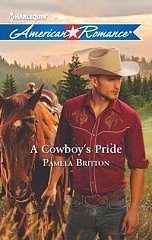
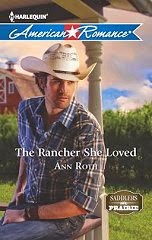
The western setting leads me to the next constant in AR. Ladies, you know what I’m talking about—the cowboy. Those swaggering, horse-riding, Stetson-wearing heroes so many of us sigh over. On a personal note, I’ll confess that for years I didn’t understand the appeal of the cowboy. Living in the city, I had never seen one except in old western movies. Then I was in Vegas one year during the NFR, the National Finals Rodeo, and there were cowboys everywhere. Well, let’s just say, YUM! Hmm. What was I talking about… Oh yes. The enduring appeal of the cowboy hero. These rugged, handsome men are the charmers, the bad boys, and the white knight all rolled up into one. What’s not to love?

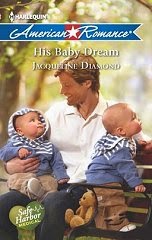
Thinking about cowboys brings me to what goes on in the bedroom, and the sometimes unexpected results of what takes place between a man and a woman…. That’s right, I’m talking about babies! All American Romances are about family, and what says family better than adorable babies. I think part of the enduring appeal of babies, kids and pregnant heroines is how they reflect the changes in the hero. The most alpha-est hero can turn to mush when up against a helpless baby. The most rugged cowboy turns protective of a pregnant woman. The baddest of the bad boys can be brought to his knees by a little girl in pigtails. Family, babies, kids. And a man who takes responsibility for his family is the sexiest hero in my book.

American Romance is really about how our families are our shelter in the storm, our armor against an ever-changing world. Family is what makes us stronger, even when individual members drive us crazy. The heroes and heroines in HAR novels are looking for their place in the world, and often that means within a family setting. Think of all the stories of single parents finding a second chance at love, of blended families, extended families—you’ll find them in American Romance. Why? Because family is what matters most.

There are many wonderful stories in American Romance, and all of them celebrate the joys of family, the warmth of community, and the magic of finding your true hero. So, raise a virtual glass with me and let’s toast to twenty-five more years of Love, Home & Happiness with American Romance!

Johanna Raisanen
Associate Editor
American Romance